Keep Reading
Get the Full Book
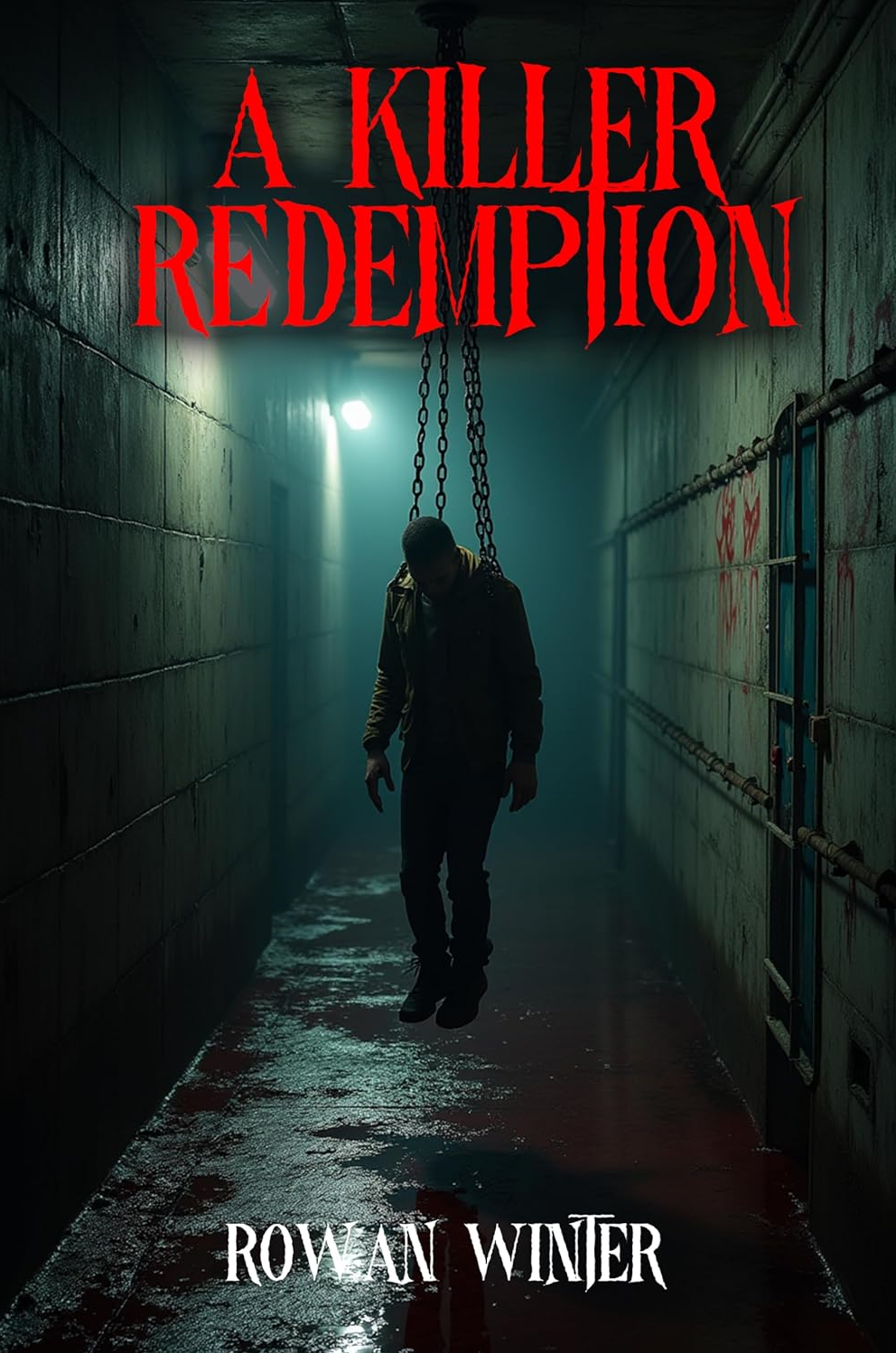
A killer seeks redemption. A detective seeks justice. Neither is prepared for what comes next.
Stay Connected
New releases, cover reveals, exclusive excerpts. No noise.
Free Sample · The Sentinel Series · Book One
Chapter One: The First Kill
6:00 AM. No alarm necessary. My body runs on precision. Every breath, every movement, every thought—calculated. The stillness of the morning settles around me like a second skin. I listen to the rhythmic hum of my own breathing before I move, before I let the weight of reality press down once more.
My muscles ache slightly from last night's workout. That's good. Pain means awareness. Pain means control. It means my body is ready, attuned to the demands I place on it. I roll my shoulders, stretching out the tension, feeling the sharp, satisfying pull of sore muscles starting at the base of my neck and traveling down between my shoulder blades. A dull ache lingers there, pulsing with each movement, a reminder of last night's training. That I am disciplined. That I am prepared.
The morning routine is the same, a carefully orchestrated ritual designed to keep the illusion intact. Shower, hot enough to sting but not enough to burn. Steam curls against the mirror, momentarily blurring my reflection. A fleeting moment where I don't exist, just a ghost slipping through routine.
I step out, towel off, and let the air cool my skin, the contrast sharp against my naturally warm, sun-bronzed complexion. A remnant of my childhood spent outdoors, long before I understood how to wear masks. I reach for the mirror, swiping a hand across the condensation. My reflection sharpens, revealing the faint white scar that curves just beneath my collarbone—an old reminder, a lesson in pain and survival. My fingers ghost over it, tracing the memory before pulling away. I turn before my mind can linger. There is no time for past wounds—only the ones I will inflict.
Coffee's brewing in the kitchen, and the smell curls its way into every corner of my apartment—rich, dark, with a little hint of berries and chocolate that lingers in the air. It's my own blend, something I've perfected over time. I call it Midnight Ember. A name no one else uses because, well, it's mine.
It's one of those small indulgences I allow myself without question. The bitterness is grounding, the heat of it anchors me to the present moment. I close my eyes for exactly twenty seconds, breathing in the aroma, letting it fill my lungs, the taste coating my tongue.
Then I move.
The clothes are always carefully chosen. Tailored black slacks, crisp and sharp. A deep navy blouse that softens the edges just enough. Not too stiff, not too casual. Professional but approachable. My hair's pulled back neatly, a look that blends me right into the crowd of agents at FBI headquarters. A face they remember just enough to trust but never enough to question.
When I step into the bullpen, the energy is familiar—loud voices, the rustling of papers, the clacking of keyboards as agents dissect the minds of criminals with meticulous determination. I move through the chaos like I've done a thousand times—nod here, quick hello there. They trust me. They respect me. They see exactly what I want them to see.
No one suspects a thing.
I settle at my desk, fingers flipping through case files stacked neatly in front of me. The weight of them is familiar, the names and missing faces a stark reminder of why I do this. Patterns. That's all they are—patterns waiting to be unraveled, secrets waiting to be unearthed.
Then I hear it—a name spoken between colleagues, casual, thoughtless, as if it means nothing. But to me, it means everything. A joke about charity and deep pockets. A chuckle at the expense of power.
William D. Hargrave.
Billionaire philanthropist. A man who donates millions to humanitarian efforts, a "savior" for at-risk women. A man whose reputation gleams like polished silver, untarnished, unchallenged.
But I know better.
I open my laptop, fingers moving without thinking. The digital footprint is there—scattered like breadcrumbs for anyone who knows where to look. Reports, transfers, missing girls who aren't missing at all—they were taken. I can see the cracks in his story, the lies he's built his empire on.
He believes he is untouchable.
That is his first mistake.
Tonight, I make my move.
Surveillance is all about patience. It's the art of knowing when to move and when to wait. When to observe and when to strike. It's about control. The slow, steady unraveling of a life, one thread at a time, until the prey is left standing, completely unaware that the ground beneath them has already disappeared.
I don't rush this part. Every detail matters. Every movement, every habit, every careless moment when he thinks he is safe. That is when he is most vulnerable. That is when I learn what I need to know.
William D. Hargrave. Born into privilege, raised in old money, groomed from childhood to believe the world was made for him. His family built their fortune in real estate—buying land, flipping it, squeezing the poor out to make way for the rich. Their empire took root in Texas, sprawling across places like Houston and Dallas, where backroom deals and political connections ensured their dynasty remained untouchable. Generations of unchecked power and wealth passed down like an heirloom, corruption running through their veins.
He walks with the arrogance of a king surveying his empire. He has never had to be cautious. Never had to second-guess a step, never had to look over his shoulder. He exists in a world where consequences belong to lesser men, where his money, his influence, and the secrets he hoards shield him from scrutiny.
But money can't save him from me.
I start with the basics—the simple rhythms of his life. His routine is predictable, a rigid schedule built on power and indulgence. Mornings at his corporate headquarters, where he plays the role of a benevolent leader, signing deals, shaking hands, and making empty promises behind polished mahogany desks. Afternoons spent in high-end restaurants, sipping overpriced wine with men who wear the same mask of respectability. Evenings at exclusive clubs, where business and pleasure blur, and the price of admission isn't paid in cash, but in bodies.
He doesn't deviate. He doesn't need to. His world is structured, built on the unshakable certainty that he is untouchable. That makes him easy to track, easy to anticipate. Easy to dismantle.
I watch from a distance, existing in the periphery of his life. A woman in an unremarkable car parked two streets away. A shadow in a café across from his favorite lunch spot, sipping black coffee, pretending to read. An anonymous face in a crowd lost in the sea of bodies he never truly sees. He never notices me. He never will.
The deeper I dig, the clearer the picture becomes. His movements are structured and deliberate, but beneath them, there's a decay pattern. He surrounds himself with power but is drawn to ruin. Politicians, businessmen, men like him—predators wrapped in designer suits. They shake hands, exchange pleasantries, and toast to a future built on the suffering of others.
Then I find it—his vulnerability. The crack in his foundation. The place where his world isn't as solid as he thinks.
A private event. Exclusive. Off the record. Hidden from the public eye. A gala meant for networking, for securing deals in whispered conversations. But I know better. I see past the glitz, past the chandeliers, the expensive hors d'oeuvres.
It's a hunting ground.
A place where women are hand-selected, where names are exchanged like currency, where power is asserted in ways that will never make it into the headlines.
He will be there. And so will I.
I make my preparations. A dress that lets me slip in unnoticed, carefully chosen to blend in with the elite. A fabricated invitation, crafted with precision, traced back to a source that does not exist—an alias, stitched together from years of practice, one of many faces I have worn.
I am not reckless—I do not leave traces. I am the perfect ghost.
And when the night comes, he won't see me coming.
Because the hunt has already begun.
The night air is thick with perfume and privilege, a heavy veil of excess that clings to the lavish gala like a second skin. Crystal chandeliers hang from the high ceiling, casting a golden glow over the elegantly dressed guests who move through the space with effortless grace. Conversations hum beneath the classical music, meaningless pleasantries exchanged over delicate glasses filled with overpriced champagne.
I walk among them unnoticed, my presence carefully curated to blend in. My dress is deep burgundy, satin that catches the light just enough to suggest elegance without demanding attention. The strapless design bares my shoulders, a calculated choice—enough to be seen but not enough to be remembered. The fabric clings where it should, smooth over the lines of my body, fitted at the waist, flowing just enough to allow movement without drawing unnecessary eyes. My dark hair is swept into a loose, effortless chignon, a few strands framing my face in a way that softens my features while maintaining a composed elegance. The definition in my arms and shoulders speaks of discipline, not vanity—strength hidden beneath the illusion of refinement. Everything about me is deliberate, from the subtle gleam of my jewelry to the quiet confidence in my stride. I wear poise like armor, every movement controlled, every expression measured.
Hargrave is here. I see him before he ever registers my presence, though in truth, he never truly will. He's all smiles, all charm—a practiced politician in a room full of men who pretend to respect him. His handshake is firm, his laughter carefully modulated, his gaze sharp and assessing. He moves through the crowd as if he owns it, basking in the attention, relishing the power he thinks he commands.
I watch him work, watch the way he leans in when he speaks and the way his fingers skim the wrist of a young waitress as she refills his drink. His voice is low, deliberate, a carefully controlled drawl meant to convey confidence. "You know, you have the most exquisite hands. Delicate. Refined. Have you ever considered something beyond this? I have connections, people who could change your life."
The girl laughs, polite and practiced, her eyes darting away, a flicker of discomfort she's too well-trained to show. "I appreciate that, sir, but I'm quite happy here."
His smile doesn't falter, but I catch the flicker of irritation in his expression, the way his grip on his glass tightens before he schools himself back into the perfect host. "Of course. If you ever change your mind…"
I shift slightly, slipping closer without drawing attention. The conversations around me are a web of power plays and veiled threats, each word cloaked in half-truths and double meanings. "The Senator's worried about the investigation," someone murmurs near the bar. "We need to make sure it won't lead anywhere."
A smoother voice follows, more assured, more confident. "Assurances have been made. Loose ends are being handled. We're untouchable."
They believe it. Hargrave believes it. But they don't realize they're speaking in a room where a predator lurks among them, listening, watching, waiting.
He has a pattern. They always do.
His security is lighter tonight, his usual entourage reduced to a handful of men stationed at the room's edges. He doesn't expect danger here. Why would he? This is his world, his empire—carefully constructed, immovable. A place where he believes he's untouchable.
But he's wrong.
I slip away before he does, weaving through the guests with practiced ease, exiting through a discreet side door that leads to the underground parking garage. The cool air is a stark contrast to the warmth of the gala, and I welcome it, inhaling deeply as I step into the dimly lit space. A single security camera watches from the far corner, but I've already accounted for it. I always account for everything.
Minutes later, Hargrave steps outside, his posture relaxed, his mind undoubtedly still wrapped in the intoxication of power. His driver waits beside the sleek black car, the engine idling softly, checking his watch with a mild sense of impatience. He doesn't look up as I approach from behind, a swift, silent shadow.
The first needle slips into the driver's neck, smooth and precise. He tenses for a moment, then his body slackens, his mind slipping away before he can comprehend. I catch him gently, lowering him to the pavement, ensuring no disturbance, no noise.
A precise dose, carefully measured. He stiffens, a sharp inhale caught in his throat, his body resisting for a fraction of a second before the drug takes hold. His legs buckle, his weight shifting, but I am already there, catching him before he hits the pavement.
The garage is still. Silent. No interruptions, no witnesses.
I drag him into the front seat, tilting his head just enough so it appears he's resting, a man waiting for his employer to return from a long night. His breathing is slow, steady—no alarm, no commotion. Just another shadow in a place where no one pays attention.
Now, I have all the time I need. The world above is alive with noise, but down here, the world is different. Still. Forgotten. The tunnels breathe cold air against my skin, whispering secrets of the dead. No cameras, no eyes, no escape. Just the stone walls that have swallowed the lost for centuries. Hargrave is just another shadow now—one that will never see the light again.
I move before he even has a chance to react.
A breath. A single heartbeat.
The needle slides into his neck before his brain can register the threat. His body fights for a split second before the medicine takes effect, and he stiffens as a sharp breath gets stuck in his throat. His weight shifts, and his legs give way, but I'm there to catch him before he collapses.
No noise. No struggle.
Just the silence of the moment as I lower him into the backseat, fastening his seatbelt like he's just another man who had too much to drink at the gala.
And then, just like that, William D. Hargrave ceases to exist in the world he once controlled.
Darkness wraps around the room, suffocating and unyielding, pressing in from every direction like a living thing. The weight of the earth above him is a heavy, suffocating presence—stone and dirt sealing him away from the world above. No light, no sound from the distant world outside, not even the whisper of wind. Just the suffocating silence of the forgotten.
The air is thick, damp with the scent of wet earth, rust, and something deeper—something raw, metallic. A scent that clings to the skin, sinks into the lungs, and doesn't let go. The ground beneath him is uneven, jagged in places, a cold, unforgiving surface that steals warmth from his body. The stone is old, worn smooth in some spots, rough in others—bearing the weight of time, of those who have been here before him.
I stand at the edge of the light, silent, waiting. Watching. His breathing shifts, slow at first, sluggish, his body dragging itself out of unconsciousness like something heavy and unwilling. His mind lags behind, struggling to piece together sensation, memory, reality.
Then it comes—the moment of recognition. His muscles twitch, then tense. He shifts, and the unmistakable scrape of metal on stone echoes through the chamber. Chains.
He stills. A sharp inhale, shallow and uncertain. His body stiffens as realization creeps in, slow and paralyzing. He knows.
I take a slow step forward, letting my boot click against the uneven stone floor. A deliberate sound, just enough for him to feel it. He isn't alone.
His breathing shifts again—quick, shallow. Fear. I can almost feel it bloom in his chest, like a dark flower, suffocating, tightening its grip. His mind scrambles for an explanation—anything that could make sense of this nightmare. But there is none. Not here.
I let the silence stretch out, letting it settle over him like a noose, tightening with every passing second.
Finally, I speak. "You're awake."
My voice is calm, measured. Controlled. The single candle flickers at the sound, its glow throwing jagged shadows across damp walls. The flickering light does nothing to break the weight of the darkness—it only highlights its depth, its vastness. The walls are rough-hewn rock, slick with moisture, veins of mineral streaking through them like old scars. The air is thick with the scent of damp decay, mingling with the faint iron tang of rusted metal. Once, these tunnels were part of something greater—perhaps forgotten crypts, perhaps remnants of an underground passage system lost to time. Now, they are mine. Rusted chains hang from iron bolts, driven deep into the stone, their corroded surfaces whispering of past occupants. Of past lessons.
I step closer, allowing the flickering candlelight to touch me. His eyes widen, not fully seeing me—but knowing.
His lips part, but only a ragged breath escapes. His throat struggles, the sound weak, strained. I can almost hear the panic building in his chest, working its way outward. Dehydration. Shock. Terror. They are his new companions. They are already breaking him down, without me having to lift a finger.
I crouch before him, close enough to see the sweat beading along his temple despite the chill in the room. "Do you know where you are?"
His lips crack as he tries to form words. I wait, patient, watching.
"What… what is this?"
His voice is weak, hoarse, scraping against itself. I tilt my head slightly, considering him, weighing the question.
"You already know the answer to that."
I reach forward, fingers grazing his jaw. He flinches, a pathetic, involuntary response. A waste of energy. My grip tightens—sharp, unyielding. His pulse thrums beneath my fingertips, fast and frantic, a caged animal beneath the surface of his skin.
His breath catches, his chest rising and falling too quickly. Panic claws at him, tearing away any semblance of control. But no one will hear him scream. Not here. These walls have swallowed the sounds of the lost for centuries. His voice will be no different.
His eyes dart around wildly, pupils dilating, the flickering candlelight finally giving him a clear view of me. Recognition hits him like a blow, swift and violent. His lips part, as if to speak—but no words come.
The woman from the gala. The one he barely noticed. The one who smiled politely, played her part, and vanished into the background.
Now, I am the only thing in his world.
Good.
I lean in just enough for him to feel the shift in proximity, my voice lowering to something colder, something final.
"Let's begin."
Pain is a language. One that transcends wealth, power, and the delusion of control. It strips a man down to his foundation, peeling away the layers of pretense, revealing the raw, trembling thing beneath.
I watch him, studying every reaction, every involuntary twitch, every staggered breath forced through clenched teeth. He's still fighting, still clinging to the scraps of pride, the arrogance that tells him this will pass. That he's temporary, that somehow, some way, he'll find a way out—some negotiation, some bargain, a lifeline.
I've seen it before. The body breaks first, but the mind… the mind is resilient. The mind takes time.
The candlelight flickers, casting warped shadows against the damp stone walls. The air here is heavier, thick with the weight of time, and something deeper—something forgotten. These tunnels existed long before I found them, carved from the earth for a purpose lost to history. Perhaps crypts, perhaps passages meant to connect a city that no longer remembers them. Now, they belong to me. A place where the past and the present converge in silence, where screams die before they reach the surface.
His skin has drained of color, slick with sweat, despite the chill that lingers in the air. His fingers tremble—not from the temperature, but from exhaustion. There is no warmth here. No soft breeze to carry with it a reminder of the world above. Only damp air, seeping through the cracks of ancient stone, pressing in like a second skin. The weight of dehydration, hunger, and fear has started to carve its way through him, stripping him down piece by piece.
The metal cuffs at his wrists are raw now, the skin beneath them inflamed, broken—a result of his struggle. That part? That was his doing.
Then, finally, he speaks.
His voice is hoarse, barely more than a breath. "Why?"
A simple word. Weak. Fractured.
I say nothing.
He swallows, wincing as his dry throat protests the motion. He's struggling to maintain composure, fighting to hold on to the illusion of strength. But it's slipping away. He wants to be the man he was before all this. He isn't that man anymore.
His lips part again, the words dragging themselves out like something unwilling. "What do you want?"
There it is—the plea.
I step forward, slow and deliberate. He tracks my movement with his eyes, but his body remains still. He's trying not to show how little strength he has left, but it's there, in the way his shoulders sag, the way his chest rises shallowly, the tension in his jaw.
I crouch beside him, reaching out. My fingers skim his jaw, light as a whisper, just enough to make him flinch. Just enough to remind him that I control everything now.
"How many lives?" I ask softly.
Confusion flickers across his face, a faint tremor in his breath.
I tighten my grip, nails pressing into the flesh beneath his chin. "How many families still wait for answers?"
I watch the confusion flicker across his face before the realization finally dawns. It's not just numbers. Not just bodies. It's lives. Names. Histories.
His breath catches, chest rising in a shallow, uneven rhythm. Somewhere out there, people still wake up every day hoping to find the ones they lost. Parents who still set an extra plate at the table. Siblings who leave the bedroom door open, waiting for a return that will never come. Some have given up, broken beneath the weight of unanswered prayers. Others still fight, still dig, still search.
And every single one of them—every single one—leads back to him.
I tighten my grip, nails pressing into the flesh beneath his chin. "How many voices did you silence?"
He shudders, his breath choking in his throat. Not from the pain. From the truth.
I tilt my head slightly. "Tell me, William," I say, my voice a blade, sharp, controlled, unfeeling. "Do you remember their faces? Or were they just numbers on a page?"
His lips tremble, but no words come. His eyes are wide, his chest heaving. He understands now, but he can't speak it. He doesn't want to.
I sigh, dragging my fingertips along the hollow of his throat, feeling the frantic pulse beneath his skin. "Seventy-four."
His brow twitches, his eyes flicking up to meet mine, desperation cutting through the exhaustion.
He doesn't want to believe it.
I nod slowly. "Seventy-four lives. Seventy-four children ripped from their families, stolen from the streets, from their homes. Seventy-four futures erased—birthdays never celebrated, dreams never realized. Parents wake up screaming in the night, still hearing their child's voice. Siblings leave the door cracked open, just in case. Some families gave up, broken by the weight of loss. Others still fight, still search. And all of them lead back to you."
He shakes his head, weak, barely perceptible—a denial built on fear, not innocence.
"Some were too young to understand. Others lived just long enough to know exactly what was happening to them." My fingers trail to his collarbone, pressing down, feeling the hitch in his breath. "Does that number sound right to you?"
The sound he makes is not a word, not even a human noise. It's something unraveling, a soul cracking under the weight of its own guilt.
I lean in, letting my breath brush against his ear. "You convinced yourself you were untouchable. That money made you untouchable. That power made you more than a man."
I smile, slow and deliberate, watching his world crumble.
"You were wrong."
His body sags against the restraints. His head tilts slightly downward, his shoulders curling inward. He understands now.
The weight of what he has done is suffocating him. He's drowning in it.
And I'm going to let him.
I reach for the tools beside me, fingers curling around cold steel. The weight is familiar, an extension of my will. In this place, in the bowels of a forgotten city, surrounded by stone that has entombed the lost for centuries, I am in control. The world above does not matter. Only this moment does. And now, I can begin.
The body gives up long before the mind does. Hunger gnaws at him, and thirst carves its way through his insides, but his mind still clings to hope—a pathetic, fragile thing. Even now, even after the truth has settled into his bones, he still fights the inevitable.
That's why I don't rush this.
Hope is delicate, and I like to watch it struggle before I snuff it out entirely.
He slumps against the chains, his once-powerful frame reduced to nothing more than trembling muscle and wasted strength. It has been ten days since I brought him here. The first few, he fought. The next, he pleaded. Now, there is nothing left but the slow decay of a man who has lost everything. The sweat has dried on his skin, replaced by a thin layer of grime. His breath is shallow, lips cracked from dehydration, eyes sunken from exhaustion. His body begs for mercy, but I am not the kind of woman who grants such things.
Mercy is for those who deserve it.
I crouch beside him, watching his chest rise and fall in uneven, ragged intervals. The scent of blood and sweat clings to the air, a metallic undercurrent that mingles with the damp stone walls. The candle flickers, its flame casting jagged shadows that dance across his hollowed face.
"Tell me, William," I murmur, brushing damp strands of hair from his forehead. "Do you understand now?"
His lips part, but no words come. Just a rasp of breath, a shallow exhale that carries the weight of everything he's lost.
I tilt my head, studying him. He's close. I can feel it. Ten days, and the world outside has already started to forget him. The police have moved on, another name on a growing list of missing persons. The FBI is grasping at shadows, their best profiler stumbling over dead ends, confused by the sheer absence of a trail. They expected a demand, a mistake, a body—something. But there is nothing. Because I left nothing.
He wants to beg. I see it in his eyes—the desperate, pleading look of a man who knows he has nothing left to bargain with. But he doesn't. Not yet. There's still a sliver of resistance buried deep beneath the suffering.
I sigh, disappointed. "You still think you deserve to live."
His head twitches slightly, a weak shake. Or maybe a nod. He doesn't know anymore.
I stand, my footsteps slow and measured, circling him like a predator playing with its prey. My fingers trail over the instruments laid out on the nearby table—sharp edges catching the candlelight, steel gleaming against the darkness.
He swallows hard, his throat working around the dryness. This is the moment. The final stretch. The moment I take everything from him.
I pick up the blade, its handle familiar in my grip, its weight an extension of my will.
I lean in, my voice low, intimate. "Tell me, William. Tell me why you deserve to leave this room alive."
He tries. I see it—the faintest hope that maybe, just maybe, he can say something that will change this. Something that will give him a chance. But all that escapes is a broken sob.
A failure.
I smile softly, running the blade down the length of his jaw, tracing the sharp edge along the hollow of his throat. The steel is cold against his fevered skin, a silent promise of what comes next. He doesn't flinch. Doesn't breathe. I let the tip linger just below his pulse, feeling it tremble beneath my grip.
"That's what I thought."
First, the fingers, each one severed for the way they reached for innocence, for the lives they ruined. I see them—the children, the fear in their eyes, the way they tried to shrink away, tried to disappear into the cracks of the world where monsters like him couldn't find them.
But he always did.
I press the blade against the knuckle of his index finger, watching his breath shudder, and his eyes widen. "Did they try to run, William? Did they beg? Did they cry?" My grip tightens as I drag the steel down, slicing through flesh and tendon. His scream is guttural, raw, the sound of something breaking apart from the inside.
One. Then the next. Then the next.
For every child who couldn't run, who couldn't fight back.
He jerks in the restraints, his body convulsing from the pain. His chest rises too fast, too shallow. His nerves are burning, screaming. I am patient. I am methodical. I watch the pain consume him, let it settle into his bones before I move again.
I trail the blade down his arm, across his ribs, feeling his muscles twitch beneath my touch. His breath is nothing more than a stuttering whimper now. Weak.
I move lower, toward his feet. The blade drags lightly over his ankle, the sharp tip pressing just enough to make his leg tremble.
"Did they try to run?" I murmur.
A sob tears from his throat, strangled and desperate.
"Did they kick? Did they scream as you dragged them back?"
I curl my fingers around his foot, holding it still, pressing my thumb against the delicate tendons along the top. The way a child's ankle might have felt beneath his grip.
"Did you let them think they had a chance?"
I let the blade hover over his smallest toe, pressing just enough for him to feel the promise of it.
"You don't need these anymore."
The blade sinks in.
His body thrashes, a strangled cry ripping from his throat. The metal bites through tendon and bone, the resistance yielding in increments, slow, deliberate.
For every child who never got away.
I left him in that cell to die, alone, with nothing but the pain I had carved into him. His body would wither, his mind would unravel, and in those final moments, he would remember—every detail, every cut, every innocent life he'd destroyed. There would be no last rites, no redemption. Only the echoes of his own screams, haunting the silence, as his breath finally gave out.
And later, when the world had long forgotten him, I would bury what remained, deeper in these tunnels, where the only ones to mourn him would be the rats and insects that would eventually pick his bones clean.
The city hums outside my window, the distant wail of a siren blending with the low murmur of traffic. The world keeps moving, unaware, unchanged. But I feel it—the shift. The weight of what I've done pressing against my ribs like a secret only I can hear.
I toe off my heels at the door, the ache in my arches a dull reminder of the night's work. The apartment is exactly as I left it—immaculate, sterile, a space that belongs to someone who has no reason to be suspected. Lavender from the reed diffuser by the window lingers in the air, masking the faint scent of bleach and routine beneath it.
I walk through the quiet, each step precise, deliberate. The hum of the refrigerator, the faint ticking of the clock on the wall, the soft sigh of fabric as I slip off my coat—these are the sounds of my normal life, the ones that ground me, the ones that remind me that my cover is intact.
I strip off my clothes in the bathroom, rolling the fabric into a sealed bag before tucking it beneath the sink. Later, when the timing is right, I'll take it somewhere secluded and burn it—ashes don't leave evidence. The scent of damp stone and dried blood clings to my skin, invisible but present. The water hisses as I turn the shower handle, steam rising instantly. The first scalding spray shocks my nerves awake, the heat soaking deep into my muscles, unwinding the tension thread by thread. I scrub harder than I need to, watching pink-tinged water swirl down the drain, taking the night with it.
By the time I step out, the mirror is fogged, my reflection nothing more than a blurred silhouette. A fresh towel, soft and familiar, wraps around me as I exhale, steadying myself. No hesitation. No cracks. Just another night. Just another name crossed off a list.
The chime of my phone interrupts the moment. I wipe a hand across the mirror, revealing sharp eyes, smooth composure. Morning briefing. The Bureau calls. Time to slip into someone else again.
I move through the motions with practiced ease. The scent of fresh coffee fills the kitchen, rich and dark, cutting through the last remnants of exhaustion. A clean suit, a pressed blouse, every button aligned, every detail precise. The mask settles back into place, seamless, effortless.
The case files wait on my tablet as I sip my coffee, the screen glowing with familiar words. William Hargrave: Still missing. No leads. No suspects. The FBI's best are still chasing shadows, running their algorithms, building their profiles.
A small, knowing smile touches my lips before I finish my drink. The world still believes in monsters hiding in the dark.
They don't realize the real ones walk among them.
Time to go to work.
— End of Chapter One —
Keep Reading
A killer seeks redemption. A detective seeks justice. Neither is prepared for what comes next.
Stay Connected
New releases, cover reveals, exclusive excerpts. No noise.