The story behind the books Why I Write

Six moments. One honest account of how writing went from something that kept me alive to something I finally let other people read.

01  —  Before

Life Before

There was a version of this life that didn't involve books at all.

Not as a writer, anyway. As a reader — always. There was a small bookstore early in life that made difficult days quieter. Comics and novels. Stories that could carry you through something you didn't have language for yet. That sense stayed. But writing felt like something other people did.

The accident changed that.

02  —  The Break

The Accident

The kind of pain that doesn't announce an end date. It just arrives, and stays, and reorganizes everything around itself.

The details aren't the point. What matters is what came after: weeks, then months, of a body that refused to cooperate. Severe pain. Sleep that wouldn't come, or came and left before it finished the job. The particular texture of 2 AM when the rest of the world is dark and quiet and you are neither.

That kind of time is strange. It stretches. There are only so many things you can do in the small hours when rest is unavailable and everything hurts. Most of them don't help.

Writing helped.

03  —  The Hours

The Long Nights

Not writing toward anything. Writing away from something. That's a different kind of work entirely.

It wasn't craft at first. It wasn't even storytelling, not really. It was somewhere else to be. A world that I could walk around in, that existed entirely apart from the pain and the ceiling and the hours that wouldn't pass.

The writing was clumsy. It didn't matter. What mattered was that while I was in it, the other thing — the body, the fog, the weight — receded slightly. Not gone. But lighter.

That discovery — that stories could do that, not just as a reader but as a writer — is the thing that didn't leave when the worst of the recovery passed.

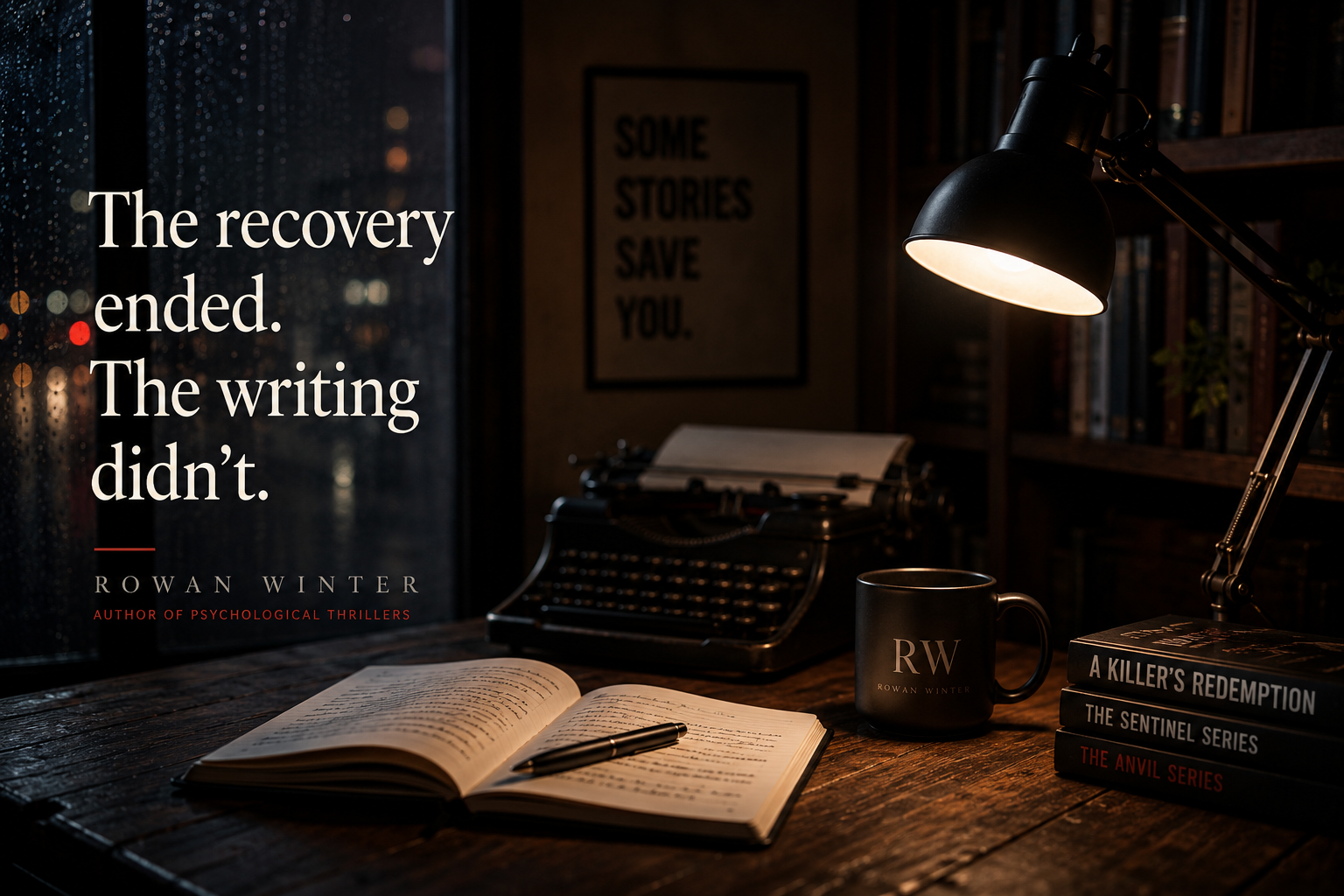
The recovery period — the long quiet hours that became the beginning of writing

The recovery ended. The writing didn't.

04  —  The Discovery

What Writing Actually Was

Most things you discover in pain, you're glad to leave behind. This one followed me out.

I didn't plan to keep going. The assumption was always that it was temporary — something that filled a particular gap and would fade when the gap closed. But the gap closed, and the writing stayed. It had become something else by then. Not just escape. Something closer to thinking. To working out what I actually believed about things.

My father spent over 35 years in law enforcement. That's not background detail — that's a lifetime of stories told in a particular way, with the kind of precision that only comes from having been present. Over the years, those stories accumulated. The texture of real police work. The moral weight of it. The grey.

That voice was already in me by the time I started writing thrillers. I didn't have to research it. I'd been listening to it for decades.

05  —  The First Books

The Anvil Series

Three books. Written across those sleepless stretches. Nobody saw them for years — and that was entirely my fault.

The Anvil Series came first. Science fiction — because science fiction was where my mind could go when my body wouldn't let me rest. I built worlds. Ancient machines. Deep space. People trying to hold things together while everything around them came apart. Three books, finished, sitting on a hard drive.

And then: nothing. Not from lack of effort — from lack of nerve. The question every writer knows, especially early on: Who would even want to read this?

Another writer eventually gave me advice that changed the framing: write shorter books first. Build the process. Build an audience. Give readers a way in. That advice led to the Blackwater Series — three shorter crime novels that became my education in the practical side of publishing. Covers, descriptions, discoverability. The strange ecosystem of how readers actually find books. Faster and leaner than the Anvil trilogy, and worth every lesson.

06  —  Publication

A Killer's Redemption

The first one I finished and let go. A different kind of terrifying than anything that came before it.

Sending a book into the world after years of writing in private is its own specific experience. It isn't the same fear as the accident — it's smaller, and more optional, and nobody is going to help you recover from it. But it's real.

Then The Interpretive Frame. Then the Anvil Series, finally released — the books from those early nights, the ones that started all of it, out in the world at last.

I still don't think of myself as an author in the way that word sometimes sounds — like a title you claim on purpose, with a plan. I think of myself as someone who found that writing was the thing that helped, and never stopped. The recovery ended. The writing didn't.

If you're here because you found the books — I'm glad. If you found this page because you're having a hard stretch of your own: I hope the stories help. That's what they're for. That's why I write.
— Rowan Winter

Author  ·  RowanWinterMedia.com

Continue the Journey

If this story resonated,
start with the book that began it.

Everything on this page led here.

Start Reading

All of them written in those quiet, difficult hours.

New releases, cover reveals, exclusive excerpts. No noise.

See Latest News Follow on Facebook